
Living in Kileleshwa, Nairobi: 2026 Neighbourhood Guide (Prices, Schools, Lifestyle)
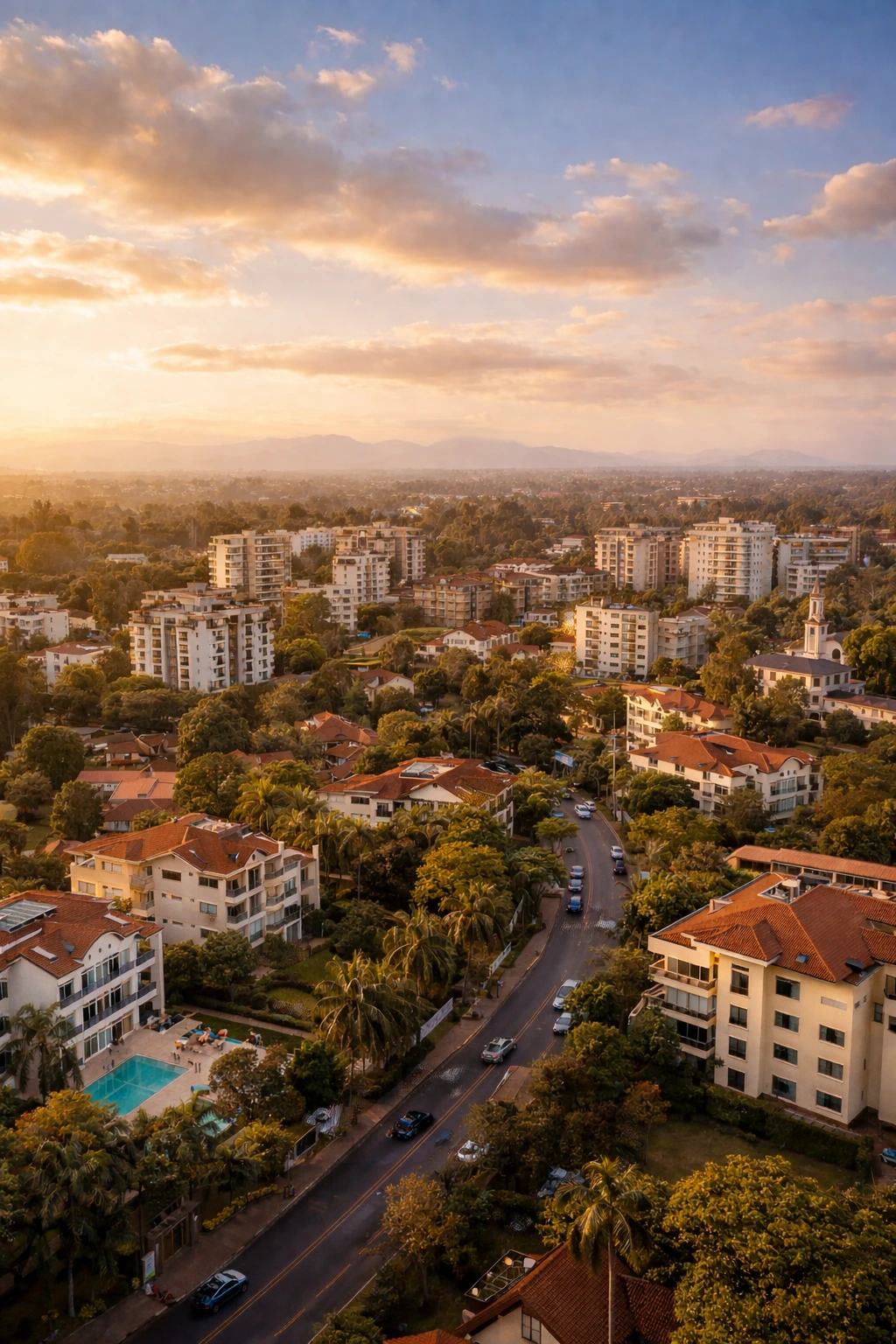
Kileleshwa is the kind of neighbourhood that does not need to sell itself. Ask any long-term resident why they have not moved, and the answer is almost always: “This one just works.” Short drive to the CBD. Good schools on the doorstep. Quiet streets lined with jacaranda and eucalyptus.
Modern apartments with pools and gyms behind secure compound gates. And the Nairobi Arboretum, two kilometres away, if you want a 6 AM walk that makes you forget you are in one of Africa’s busiest cities.
It is not the flashiest address in Nairobi, and that is the point. It is the one that holds its value and keeps its residents.
Explore current Kileleshwa properties for sale and Kileleshwa rentals to see what is available right now.
Where exactly is Kileleshwa?
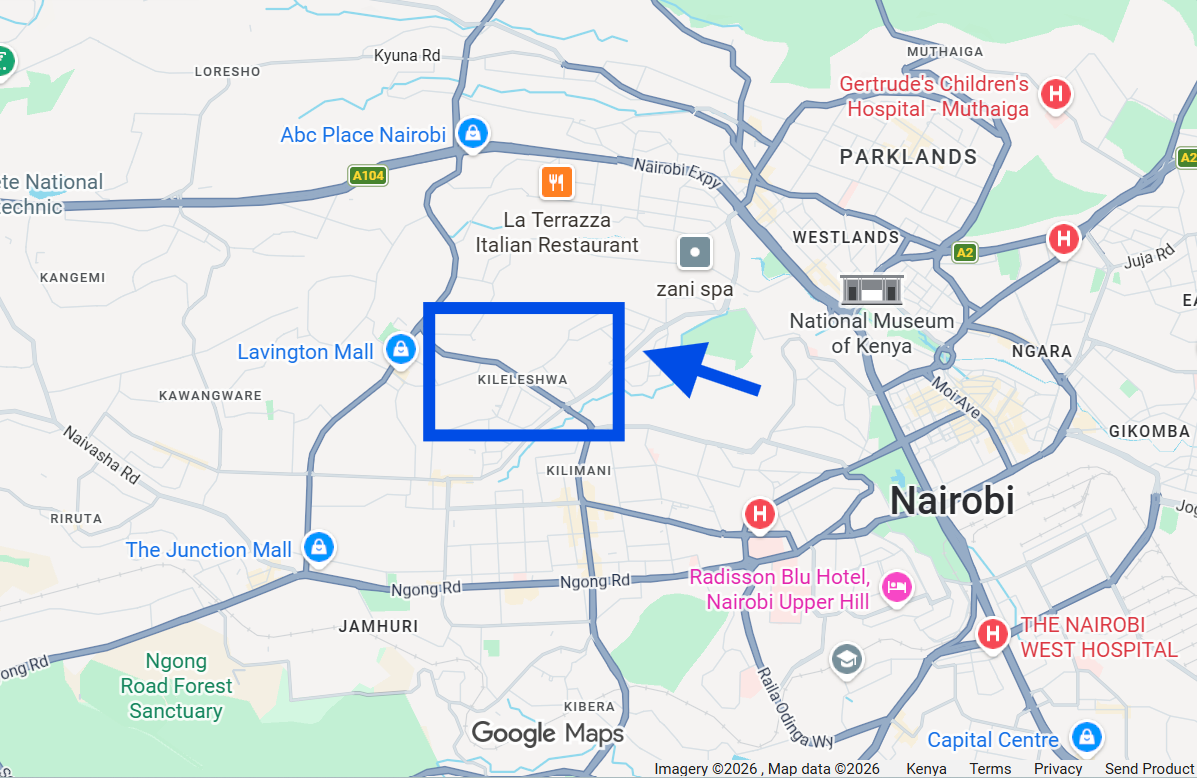
Kileleshwa sits about 4 km west of the CBD, bordering:
The neighbourhood’s internal streets, Mandera Road, Gichugu Road, Othaya Road, Suguta Road, and Olenguruone Avenue, form a calm, relatively low-traffic grid.
The eastern boundary runs along State House Road, which brings a permanent security presence to that corridor and occasional road closures during state events. Residents on that side use Gichugu Road as their bypass.
The feel is residential, in a way that parts of Kilimani have gradually lost, while parts of Lavington have always maintained it. It’s not rural-quiet, but city-quiet, if that distinction means anything to you.
The Nairobi Expressway connects to Riverside Drive and cuts the airport run and south-Nairobi commutes considerably compared to the old surface road routes.
There is also ongoing rehabilitation work on sections of Durham Road, Gichugu Road, and Likoni Lane, improving surfaces and drainage in parts of the neighbourhood.
Commute times from Kileleshwa
| Destination | Off-peak | Peak hours |
| CBD | 10 to 15 min | 25 to 40 min |
| Upperhill | 8 to 12 min | 15 to 25 min |
| Westlands | 10 to 15 min | 20 to 30 min |
| Wilson Airport | 15 to 20 min | 25 to 35 min |
| JKIA | 25 to 35 min | 40 to 55 min |
Denis Pritt Road to the east backs up between 7 and 9 AM. Most residents route through Riverside Drive or Suguta Road instead. It takes a few weeks to find your preferred route, but once you know the bypasses, the commute is reliable.
Getting around without a car
- Matatus: Routes through Murang’a Road and Valley Road corridors connect to the CBD. Fares run KES 50 to 100 (approximately USD 0.40 to 0.80).
- Ride-hailing: Uber, Bolt, and Little Cab are consistently available. Most residents commuting to Upperhill or Westlands use ride-hailing. Boda bodas cover short errands within the neighbourhood.
Who lives in Kileleshwa?
- Senior professionals and managers working in Upperhill, CBD, or Westlands who want a short commute home to somewhere quiet.
- Families with children in Kenton College, Kenya High School, or the Lavington school belt, 2 km away.
- Diplomatic and NGO staff based in Riverside or Gigiri who find Kileleshwa more amenity-rich than Riverside at a lower price.
- Established Kenyan families, some of whom have been in the neighbourhood for a generation, are now buying nearby.
- Remote workers who need reliable power and internet.
- Diaspora investors are looking for a stable yield from a tenant base they can rely on.
It is not a young-professional party suburb. The diversity of the resident group, from families to senior executives to long-term expats, is part of what keeps vacancy low and the community stable.
Education
School access is one of the most practical arguments for Kileleshwa and one that clearly distinguishes it from neighbouring suburbs.
Schools Within Kileleshwa
International Schools
- Kenton College Preparatory – British-aligned preparatory school, Gichugu Road
- Ascend International School – International curriculum, Othaya Road
- Goodrich International School – International curriculum, Kileleshwa
Kenyan Curriculum Schools (CBC / National System)
- Kenya High School – National girls’ secondary school, Mandera Road
- Kileleshwa Academy – Kenyan CBC, Mugoiri Road
- Kileleshwa Primary School – Public primary (CBC), Gichugu Road
- Gates and Bridges School – Kenyan CBC, Off Oloitoktok Road
- Augustana Academy – Kenyan CBC, Mandera Road
Early Years
- Crystal House Kindergarten – Early years, Mandera Road
Within 1.5 to 3 Kilometres
- Braeburn School (Lavington, 2 km): British curriculum, large expat community
- Rusinga School (Lavington, 2 km): British and Kenyan CBC pathways
- Strathmore School (Lavington, 2 km): Catholic faith-based, strong academic reputation
- Brookhurst International (Lavington, 2 km)
- Light International School (Lavington, 2 km)
- Nairobi Jaffery Academy (Lavington, 2 km)
- Jabali School (Kilimani, 1.5 km)
- Riara Primary School (Kilimani, 1.5 km)
- Aga Khan Academy (Parklands, 3 km): IB curriculum, Early Years through Diploma
- Peponi School (Spring Valley, 3 km): one of East Africa’s most regarded day and boarding schools
Within 6 to 8 Kilometres
- German School Nairobi (Gigiri, 6 km)
- Brookhouse Schools (Karen, 8 km): British curriculum and IB
- Hillcrest International School (Karen, 8 km): IB curriculum
School runs from Kileleshwa to the Lavington belt take under 15 minutes outside peak hours.
Shopping
Within Kileleshwa:
- Kasuku Centre (Oloitoktok Road): the neighbourhood’s community retail hub with a supermarket, pharmacy, eateries, and shops
- Basic Mall (Mandera Road): everyday grocery and household needs
- Quickmart Kileleshwa: convenient for daily top-ups and groceries
Within 1 to 2 kilometres:
- Yaya Centre (Kilimani border, 1 km): supermarket, services, and a growing food and dining floor
- Valley Arcade (Lavington, 1.5 km): popular open-air mall with a strong food scene and boutiques
- Lavington Mall (Lavington, 2 km): includes Carrefour supermarket
Within 3 to 5 kilometres:
- Sarit Centre (Westlands, 3 km): one of Nairobi’s larger malls: fashion, electronics, banking, dining, cinema
- Westgate Shopping Mall (Westlands, 4 km): broad retail, Zucchini grocery and deli, restaurants
Restaurants and Cafes
Kileleshwa’s dining scene is sized for residents, not for destination dining. What is in the neighbourhood handles daily use well. Within a 15-minute drive, the full range of Nairobi’s food culture is accessible.
Cafes and All-Day Dining
- Java House Kileleshwa: an all-day café and the kind of place remote workers, families, and quick-lunch crowds all find useful.
- Willow Garden (Olenguruone Avenue): wood-crafted bistro with an open bar, wood-fired pizza, premium steaks, artisanal coffee, and fine wines.
Seafood and Live Music
- Samaki Samaki Seafood and Jazz (28 Othaya Road): fresh seafood and live jazz, with garden and indoor seating; a standout night-out option within the neighbourhood itself. Live jazz on Saturdays and a kids’ play area.
Pan-Asian
- Sesame Asian Tapas (Kasuku Centre): Pan-Asian small plates that have built a loyal neighbourhood following
Continental and Garden Dining
- About Thyme (Eldama Ravine Road, Westlands, 3 km): garden dining in Westlands. A short drive that Kileleshwa residents make regularly for weekend dinners.
Lebanese
- Cedars Restaurant (Lenana Road, Kilimani, 2 km): Lebanese cuisine in a garden setting that has been a fixture in this part of Nairobi for over 20 years.
Brunch
- Canopy Café (Wood Avenue, Kilimani, 1.5 km) is a focused brunch-and-coffee spot popular on weekend mornings with younger residents and remote workers.
Neighbourhood Classics
- Hellena’s Kitchen (Mandera Road): local home-cooking in a neighbourhood setting
- Charlie’s Kileleshwa (Mandera Road): casual spot for quick meals
Healthcare
Within Kileleshwa:
- Kileleshwa Medical Plaza (Gichugu Road / Kandara Road): the neighbourhood’s most comprehensive outpatient facility; general practice, specialist consultations, diagnostics, and pharmacy all in one building
- Caremark Hospital (Suguta Road): inpatient care and emergency services
Within 3 to 5 kilometres:
- Avenue Healthcare (1st Parklands Avenue, 4 km): a 140-bed private hospital with ICU, maternity, surgical wards, and specialist clinics; one of Nairobi’s more comprehensive private facilities
- AAR Hospital (Kiambu Road, opposite Karura Forest, 4 km): 140-bed Level 5 referral hospital; 20 specialist clinics, 24-hour emergency and dialysis, ICU.
Nairobi Hospital and the Upperhill private hospital cluster are under 15 minutes by road for major procedures.
Utilities and Infrastructure
Electricity
Kenya Power supplies the area. Most apartment blocks built in the last decade include backup generators covering lifts, common areas, and, in many cases, in-unit power during outages. When viewing a property, confirm specifically what the generator covers and how long the fuel supply lasts. Both answers vary between buildings.
Water
Nairobi Water and Sewerage Company supplies the neighbourhood, and interruptions occur as they do city-wide. Most established buildings supplement the county supply with boreholes and storage tanks. Before committing to any property, ask:
- Does the building have a functioning borehole?
- What is the tank storage capacity?
- How often is the system serviced?
A building with a maintained borehole and adequate storage handles interruptions without residents noticing. One relying entirely on county supply does not.
Internet
Fibre broadband is available throughout Kileleshwa from Safaricom Home Fibre, Zuku, Faiba, and others. Connection quality is generally reliable. Combined with generator backup, the neighbourhood is one of the more practical options in Nairobi for consistent remote work.
Green Spaces and Recreation
Kileleshwa has some recreational spaces, such as:
- The Nairobi Arboretum (2 km, off State House Road) – For residents, it functions as a daily amenity: morning jogs, dog walks, weekend picnics, and serious birdwatching. It rarely overcrowds.
- Karura Forest (3 km, off Limuru Road) – An urban forest with over 50 km of walking and cycling trails, a waterfall, a picnic area, and bicycle hire.
- Nairobi National Park (10 km) – Families who live here use it as a regular weekend morning, not a tourist itinerary item.
- Giraffe Centre (8 km, Langata) – a giraffe conservation and education facility open to the public. A straightforward weekend activity for families with children.
Property Prices in Kileleshwa (2026)
The market is dominated by apartments: studios and 1-bedrooms in newer high-rise developments, 2 and 3-bedroom units covering the widest range of buyers and renters, 3 and 4-bedroom units with DSQ (domestic staff quarter) for families, and duplex penthouses at the top of select buildings.
For Rent (monthly)
| Unit type | KES per month | Approx. USD |
| Studio / 1-bedroom | 50,000 to 60,000 | $310 to $460 |
| 2-bedroom | 80,000 to 110,000 | $460 to $615 |
| 3-bedroom | 80,000 to 150,000 | $615 to $1,150 |
| 4-bedroom / premium | 150,000 and above | $1,150+ |
Furnished units command a 20% to 40% premium over unfurnished equivalents. Buildings with pools, gyms, and confirmed generator backup consistently sit at the upper end of each band.
Service charges
Monthly service charges typically run KES 8,000 to KES 20,000, depending on building age, amenities, and management quality. Always add this to the monthly cost comparison when evaluating a rental, and factor it into yield calculations on a purchase.
Browse current Kileleshwa apartments for rent and houses for rent in Kileleshwa.
For Purchase
| Unit type | KES | Approx. USD |
| Studio / 1-bedroom | 4,000,000 to 8,000,000 | $31,000 to $62,000 |
| 2-bedroom | 8,000,000 to 12,500,000 | $54,000 to $96,000 |
| 3-bedroom | 9,500,000 to 24,000,000 | $73,000 to $185,000 |
| 4-bedroom / duplex | 15,000,000 to 34,000,000 | $115,000 to $262,000 |
| Penthouse/premium 5-bed | 39,500,000 and above | $305,000+ |
Stamp duty on property purchases in Kenya is 4% of the property value, payable to the Kenya Revenue Authority (KRA) as part of the transfer process.
Check apartments for sale in Kileleshwa, houses for sale in Kileleshwa, and duplex apartments for sale in Kileleshwa.
How Kileleshwa Compares to its Neighbours
People comparing options in this part of the city regularly ask which one to choose. The honest answer is that they are genuinely different places, and the right choice depends on what you are actually looking for day to day.
Kileleshwa vs Kilimani
Kilimani is more commercially active with cafes, gyms, and restaurants walkable from most buildings, and stronger short-let demand. On the other hand, Kileleshwa is quieter and more residential, with better on-site school access.
Kilimani suits young professionals and short-let investors, while Kileleshwa suits families and long-term professional tenants.
Kileleshwa vs Lavington
Lavington is spacious in a way Kileleshwa is not: larger plots, more standalone houses, lower density, and a noticeably quieter pace. It suits families and executives who specifically want a home with a garden over an apartment.
The trade-off is cost. Lavington is considerably more expensive to buy into, and for apartments in particular, the rental yields are lower because prices have risen faster than rents.
Kileleshwa vs Riverside
Riverside is directly north and is Nairobi’s most diplomatically concentrated suburb, with embassies, NGO headquarters, and UN offices along its main road. Its property market targets diplomatic tenants specifically: furnished serviced apartments and compounds built to international security standards.
Riverside has limited daily amenities within the neighbourhood; residents rely on Westlands or Kileleshwa for shopping and dining. Kileleshwa offers better value and more self-sufficient daily living for buyers outside the diplomatic market.
In short, buyers prioritising quiet streets, school access, and consistent professional tenant demand at an accessible entry price, Kileleshwa holds a balanced position in this cluster that is hard to replicate at the same cost.
For comparison, explore apartments for sale in Kilimani, houses for sale in Lavington, or apartments for sale in Riverside.
Short-term lets and Airbnb
Kileleshwa has a credible short-let market. The demand is driven mainly by business travel to Upperhill, where a concentration of development banks, UN agencies, and corporate offices generates a consistent need for short-term furnished accommodation. NGO and diplomatic visitors based in Riverside and Gigiri who prefer a residential setting to a commercial hotel district also account for a portion of bookings.
The neighbourhood suits this because the fundamentals are right: modern apartments with generator backup and fibre internet, a residential setting that business travellers prefer after long travel days, enough at Kasuku Centre for guests to be self-sufficient without a car, and a 10-minute drive to the main working zones.
Occupancy varies depending on the season, listing quality, and how actively the host manages the property. Long-term rental is simpler and more predictable. Short-let can outperform on yield during high-demand periods but requires active management. A unit that sits on a listing platform without responsive hosting, professional cleaning, and accurate photography will underperform in the market.
Is Kileleshwa right for you?
It tends to work well if you:
- Commute to Upperhill, the CBD, or Westlands, and want a short, manageable drive home to somewhere that actually feels residential
- Have school-age children and want strong options within walking distance or a 5-minute drive
- Want the city accessible without being in the middle of it
- Value morning walks, green streets, and the kind of space Nairobi has been steadily losing
- An investor looking for a stable yield from a creditworthy tenant base
- Work remotely and need reliable backup power and fast internet
It may not suit you if:
- You want bars, restaurants, and nightlife on your doorstep, Westlands and Kilimani serve that better
- Low entry price is the primary consideration. Outer suburbs like Syokimau, Ruaka, or Rongai offer far lower cost per square metre
- Your daily commute runs to the industrial area, Thika Road, or Mombasa Road corridors, where the drive from Kileleshwa becomes impractical
- You want a large standalone house on a full garden plot. Lavington or Karen fit that better.
Challenges and How Residents Navigate Them
| Challenge | How Residents Handle it |
| Morning traffic on Denis Pritt Road | Leave before 7 AM or use Riverside Drive / Suguta Road as alternatives |
| Water supply interruptions | Prioritise buildings with functioning boreholes and adequate storage tanks |
| Flooding near drainage corridors | Choose higher-floor units and ask about plot flooding history before signing |
| Construction noise from adjacent sites | Walk neighbouring plots during viewing. Ask about zoning on vacant land |
| State House Road closures | Gichugu Road is the standard east-side bypass |
| Short-let competition | Active management, generator and fibre confirmed in listing, pool access included |
How Sarabi Realty Group Can Help
Sarabi Realty Group specialises in Kileleshwa and Nairobi’s prime western suburbs. They maintain active listings across every property type in the neighbourhood:
- Apartments for sale in Kileleshwa: studios through to 5-bedroom penthouses with DSQ
- Kileleshwa apartments for rent: furnished and unfurnished across all configurations
- Houses for sale in Kileleshwa
- Houses for rent in Kileleshwa
- Duplex apartments for sale in Kileleshwa
For Diaspora Buyers
Sarabi provides a dedicated remote purchasing service covering:
- Power of Attorney coordination
- Title deed verification at the Lands Registry
- Stamp duty calculation (4% of purchase price)
- Sale agreement preparation through qualified legal partners
- End-to-end transaction management without requiring you to be physically present
Transaction support for all buyers
Sarabi team handles:
- Title deed searches and fraud verification
- Connection to qualified lawyers for sale agreements
- Guidance on stamp duty, transfer fees, and legal costs
- Property infrastructure assessment (water backup, generator, internet)
Office: Wanandege Flats, Suite A4, Kirichwa Gardens, Kilimani Phone: (+254) 0700 563 667
Conclusion
Kileleshwa’s appeal is built on things that do not go out of fashion. Good schools within the neighbourhood. A short commute to Upperhill and the CBD. Quiet, tree-lined streets that have held their character even as most of the city has grown denser around them. A 30-hectare botanical reserve is two kilometres away.
You cannot build another Kileleshwa. There is no land this close to Upperhill and the CBD that also comes with two national schools, real tree canopy, and the Nairobi Arboretum on its doorstep. That combination creates durable demand, which is what makes a neighbourhood worth buying into for the long term.