
Affordable Housing for Kenya’s Middle Class: Challenges, Progress and Opportunities
Looking for an affordable home in Kenya? Here’s what shapes prices, what the government and private developers are doing, and the practical routes middle-income earners are using to own a home.
Ask almost any salaried Kenyan what they want to own someday and the answer is usually the same: a home. Not a flashy one. Just a place with their name on the title deed, where the rent money stops leaving every month.
The dream is common. The route to it is where things get complicated. If you earn a decent salary, you may be too well off for some programmes and not quite comfortable enough for the typical mortgage. That in-between space is where many middle-income Kenyans find themselves, and it’s worth understanding properly before you commit your savings to anything.
This guide breaks down what is shaping the market, what is being done about it, and what options you can realistically look at.

Who Is Considered Middle Class in Kenya?
There’s no single official definition, but in housing talk it usually means salaried professionals, small business owners and couples with combined incomes that sit above the lowest-income brackets yet below what banks like to see for large mortgages. Think teachers, nurses, engineers, bankers, civil servants and growing entrepreneurs.
This group matters because it is large, it is growing, and it drives demand for the one- to three-bedroom homes you see advertised across Nairobi and its surrounding towns.
Why affordable homes can be hard to find
Prices don’t climb for one reason alone. A few factors tend to stack on top of each other.
Land. In and around Nairobi, land is the single biggest cost. A developer who pays a lot for a plot has to price the units accordingly, no matter how modest the building is.
Construction costs. Cement, steel, fuel and transport costs move with the wider economy. When they rise, new units cost more to put up.
Borrowing costs. Mortgage interest rates in Kenya are typically in the low-to-mid teens, though some lenders and KMRC-backed loans go lower, so monthly repayments can still be heavy. The same house can feel affordable at one rate and out of reach at another.
Deposits. Most lenders expect a deposit, often 10 percent or more of the property value, plus legal fees, valuation and stamp duty. Saving that lump sum while paying rent is the real hurdle for many people.
Supply mix. A lot of new development has historically targeted the high-end or the very low-income segments. The mid-range, where many middle-income buyers are shopping, has had fewer options. That gap is often called the “missing middle” in housing circles.
None of this means the situation is hopeless. It simply explains why the search takes patience and planning.
Kenya’s Affordable Housing Programme: What Middle-Income Earners Should Know
The good news is that housing has become a serious national priority, and there is movement on several fronts.
The Affordable Housing Programme. The government’s flagship effort aims to increase the supply of decent homes at lower prices, with units available for rent, rent-to-own and purchase. Interested Kenyans register through the Boma Yangu portal. It’s worth checking the current eligibility rules and unit prices directly, since projects and criteria are updated over time.
Mortgage market support. The Kenya Mortgage Refinance Company (KMRC) was set up to give banks and other lenders access to longer-term funds, with the goal of making home loans cheaper and longer in tenure. Over time, that can ease monthly repayments.
Private developers. More developers are building mid-priced apartments, especially in satellite towns, and offering flexible payment plans to attract first-time buyers.
Digital land services. Land records are moving online, which makes it easier to verify who really owns a property. That’s a quiet but important step for buyer confidence.
It’s a work in progress, and results vary by project and location. But the direction is toward more options, not fewer.
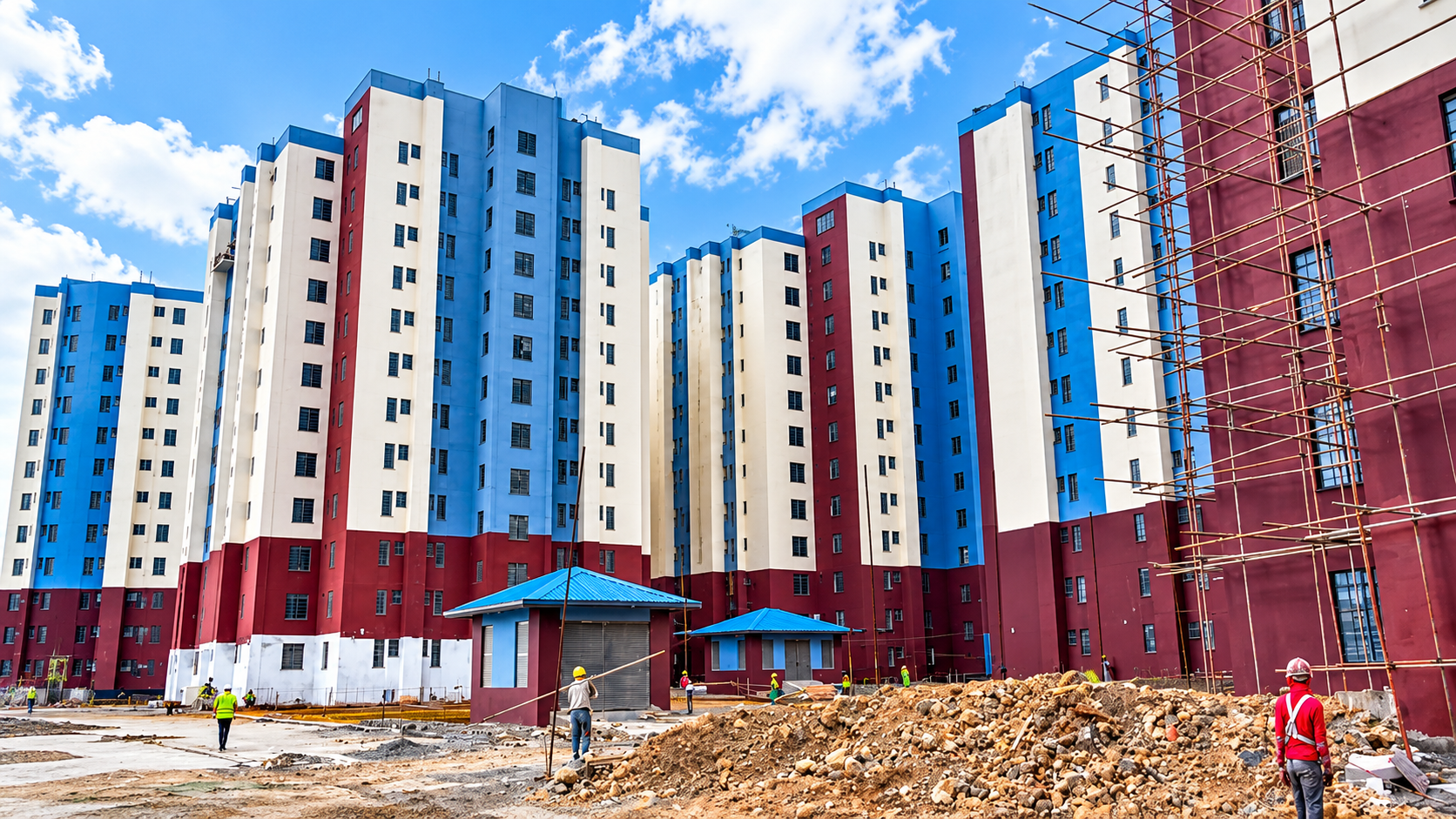
How to Buy a House in Kenya: 6 Practical Options
This is where listings sites like Buy Rent come in handy, because the “right” route depends on your income, savings and patience.
1. A bank mortgage
Still the most straightforward path if you have a stable income and a deposit. Compare lenders, not just interest rates. Ask about fees, early repayment terms and whether the rate is fixed or variable.
2. Sacco and employer-backed loans
Many Kenyans quietly skip the bank. Saccos often offer lower rates and friendlier terms to members, and some employers have housing loan schemes or partnerships with developers. If you belong to a sacco, ask what it offers for housing before you apply elsewhere.
3. Chamas and group investment
Pooling money with trusted people lets you buy land or a unit together, or build up a deposit faster than you could alone. Put everything in writing, including who owns what and what happens if someone wants out.
4. Off-plan purchases
Buying before a building is finished usually means a lower price and a staggered payment plan. The trade-off is risk. Check the developer’s track record, visit completed projects, and confirm the land title and approvals before you pay a shilling.
5. Rent-to-own
A portion of what you pay as rent goes toward eventually owning the unit. It’s a gentler way in if you can’t raise a large deposit, but read the contract carefully so you understand what happens if you miss payments.
6. Buy land first, build gradually
A very Kenyan approach: buy a plot in a growing town, then build in phases as money allows. It takes longer, but it can be cheaper overall and lets you design to your budget.
Rent or Buy in Kenya: Which Makes More Sense?
Here’s a question worth asking before you chase a mortgage: does buying make sense for you right now?
If you expect to move cities for work, haven’t built an emergency fund, or would stretch your budget thin to afford repayments, renting a bit longer while you save may be the smarter move. Owning a home comes with rates, maintenance and service charges that rent doesn’t. On the other hand, if you plan to stay put and rent keeps rising, buying earlier can pay off.
There’s no single right answer. Add up your own rent, deposit and monthly repayments, then decide.
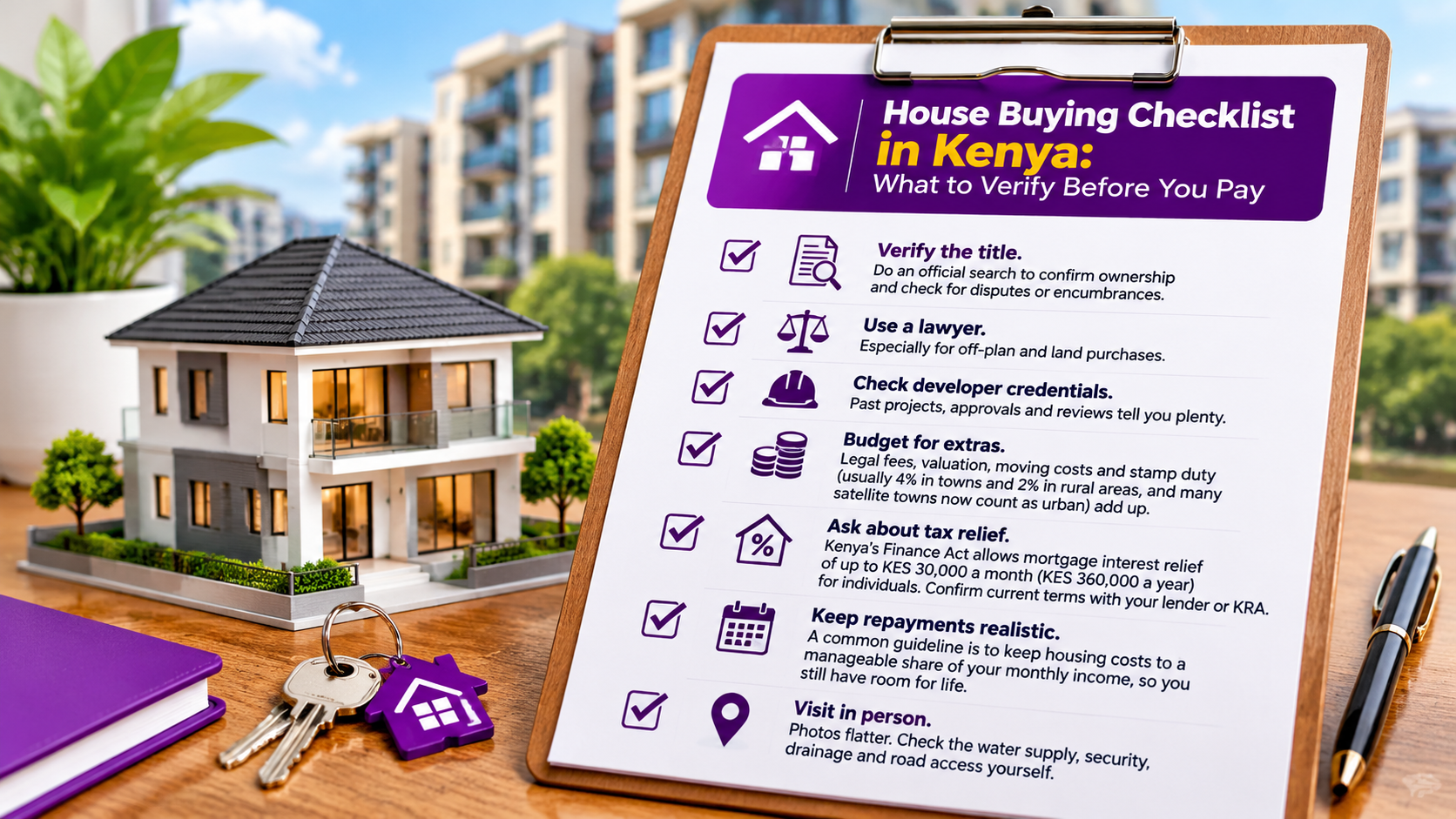
House Buying Checklist in Kenya: What to Verify Before You Pay
- Verify the title. Do an official search to confirm ownership and check for disputes or encumbrances.
- Use a lawyer. Especially for off-plan and land purchases.
- Check developer credentials. Past projects, approvals and reviews tell you plenty.
- Budget for extras. Legal fees, valuation, moving costs and stamp duty (usually 4% in towns and 2% in rural areas, and many satellite towns now count as urban) add up.
- Ask about tax relief. Kenya’s Finance Act allows mortgage interest relief of up to KES 30,000 a month (KES 360,000 a year) for individuals. Confirm current terms with your lender or KRA.
- Keep repayments realistic. A common guideline is to keep housing costs to a manageable share of your monthly income, so you still have room for life.
- Visit in person. Photos flatter. Check the water supply, security, drainage and road access yourself.
Frequently Asked Questions About Buying a Home in Kenya
How much deposit do you need to buy a house in Kenya?
Most banks ask for a deposit, commonly somewhere between 10 and 20 percent of the property price, though it varies by lender and your profile. Budget separately for legal fees, valuation and stamp duty, which can add a meaningful amount on top.
Can I use my sacco savings to buy a house?
Often you can borrow against your sacco savings or use a sacco housing loan, usually at friendlier terms than a bank. Rules differ from one sacco to another, so ask yours about limits, repayment periods and security required.
What is Boma Yangu?
Boma Yangu is the online portal where Kenyans register their interest in units under the government’s Affordable Housing Programme. Check the portal for current eligibility, prices and available projects.
Is it cheaper to buy a house in a satellite town than in Nairobi?
Generally, yes. Towns on the outskirts of Nairobi tend to offer lower prices per square metre. Weigh the savings against daily commute time and transport costs.
Is buying off-plan safe?
It can be, if you do your homework. Verify the developer’s track record, the land title and the approvals, and have a lawyer review the sale agreement before you pay.
Final Thoughts: Finding Affordable Housing in Kenya
Affordable housing for the middle class in Kenya is a real challenge, but it’s not a closed door. Costs are shaped by land, borrowing and supply, while new programmes, financing options and growing towns are widening the choices. The buyers who do best are usually the ones who start early, compare carefully, and match the route to their own situation instead of following the crowd.
Browse verified listings, compare locations and prices, and take your time. The right home is out there, and the more you know, the better your chances of finding it.