
Before the Estate Comes the Road: How Infrastructure Shapes Where People Live
Key Takeaways
Infrastructure and housing in Kenya are tightly linked: estates tend to follow the road, not the other way around. Highways and bypasses around Nairobi opened up cheap land, attracted developers and pulled in residents. But 2026 land price data suggests much of that road-driven growth is now priced in across many satellite towns. Roads are only the first layer, because water, sewers and drainage often arrive years later, and residents carry the cost in between. For buyers, the lesson is to look past the tarmac and check whether the services are really there. The post ends with a practical checklist.
Drive out of Nairobi in any direction and you’ll see the pattern. A road gets built or widened, and a few years later the plots beside it are full of estates, shops and schools. The house comes second. The road comes first.
How Roads Drive Real Estate Growth Around Nairobi: Thika Road and the Nairobi Expressway
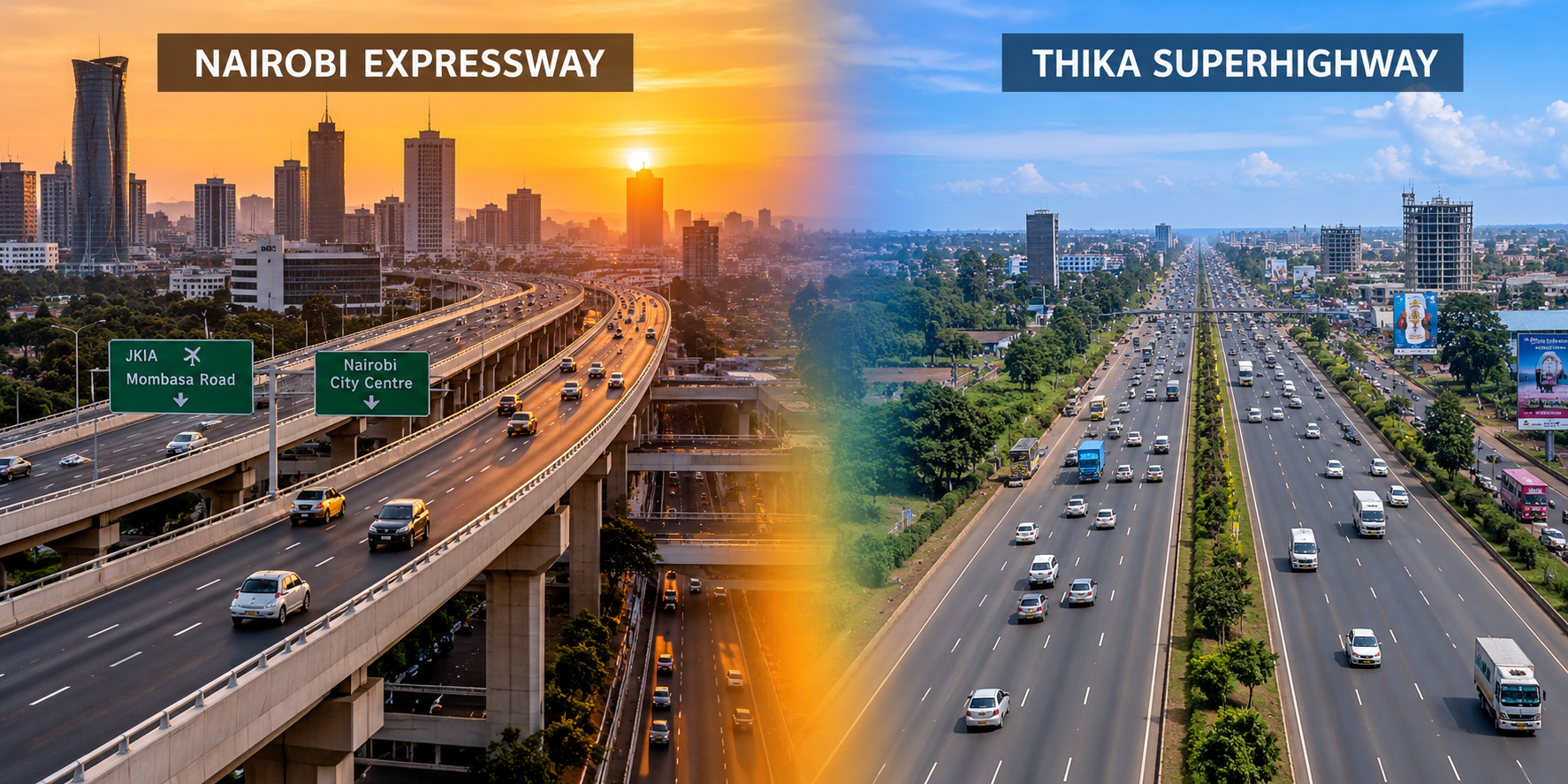
The clearest example is Thika Road, which expanded from four lanes into an eight to 12-lane superhighway. Ruiru, where the Eastern Bypass meets it, saw its population grow by 54 per cent to 371,111 over the decade to 2019, and land followed. Ruiru now has the highest 10-year growth in land prices, reaching Sh42.2 million an acre by June 2026. A 2018 industry report described the same effect, with the highway bringing an influx of residential and commercial developments to Kasarani, Thika, Ruiru and Juja. The Nairobi Expressway did something similar on the other side of the city. Syokimau became more accessible once it opened, and land prices there rose 20.1 per cent over the year
Why Commute Time Matters When Choosing Where to Live in Kenya
Many Kenyans are less interested in the biggest house they can afford than in a trip to work they can predict. Before the Expressway opened, one estimate projected that it would cut peak travel time on Mombasa Road from about two hours to between 10 and 15 minutes. That was a pre-completion projection, not measured data, but it shows why buyers treat access as part of the price. People moving to satellite towns often cite affordable land and the chance to enjoy better infrastructure.
Are Land Prices in Nairobi’s Satellite Towns Still Rising in 2026?
Growth has slowed. Land prices in satellite towns grew by an average of 4.3 per cent in the year to March 2026, down from 9.93 per cent the year before. The analysts behind the index said the infrastructure-led uplift across many satellite towns is now largely priced into land values.
The picture is uneven. In the second quarter of 2026, seven of the 14 satellite towns tracked recorded negative growth, including Ngong, Syokimau, Athi River and Kitengela. Ruiru bucked the trend, with a 4.1 per cent quarterly rise linked to mixed-use developments such as Tatu City and Northlands. For buyers, the lesson is that the easy gains from an already-completed road may be gone. What drives prices now is the next layer of development.
Water, Sewer and Drainage: Why Services Matter as Much as Roads
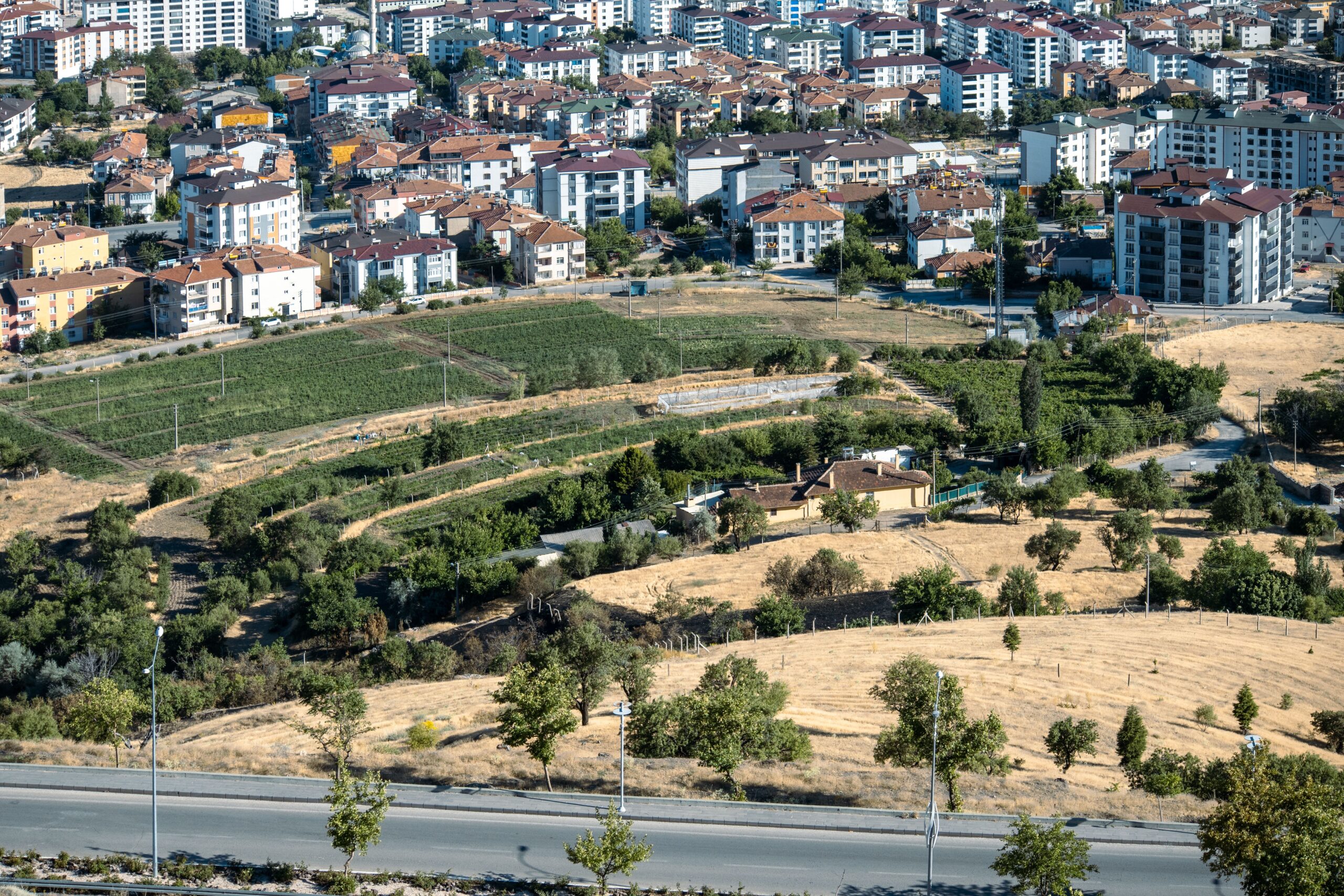
A road gets people to an estate. Water, sewers and drainage decide whether they can live comfortably once they’re there. A 2018 report on the Nairobi metropolitan area found that piped water access in satellite towns in Kajiado and Machakos counties was only 42 and 48 per cent respectively, which pushed residents toward vendors and boreholes. These figures are a few years old, so check the current situation before buying.
The gap has consequences. After heavy rains in Kitengela, the Nation reported that essential services such as the sewer system lag far behind human settlements. That report is older, but the issue hasn’t gone away. In dry spells, boreholes in Nairobi and Kitengela have run low, with many apartments drawing from the same water table.
What Happens When Estates Are Built Before the Roads and Services?
Plenty of buyers get the order wrong. Industry research has noted that many satellite-town residential developments lack reliable water, sewer and power. When estates are built ahead of services, residents fill the gap themselves with tanks, boreholes, generators and long walks over murram roads. In the worst cases, buildings on waterways are caught up in flood-related demolitions, as we saw in Nairobi in 2026.
Checklist: What to Check Before Buying Land or a House Near a New Road in Kenya
- Confirm the road is built, not just announced. A government announcement or a developer’s brochure isn’t the same as a road under construction or open to traffic. Ask the relevant roads authority.
- Test the commute at rush hour. Drive it on a weekday morning and evening, not on a Sunday viewing.
- Ask where the water comes from. Mains, borehole or vendor? Ask for borehole test results and how the building copes in a dry spell.
- Check sewer and drainage. Is the estate on a sewer line or a septic system, and does the compound flood in heavy rain?
- Find out what’s already priced in. If the road opened years ago, the price jump may be behind you. Compare asking prices with recent published land price indexes.
- Look at power and security. Ask about outages, street lighting and how far the nearest school and clinic are.
The Bottom Line
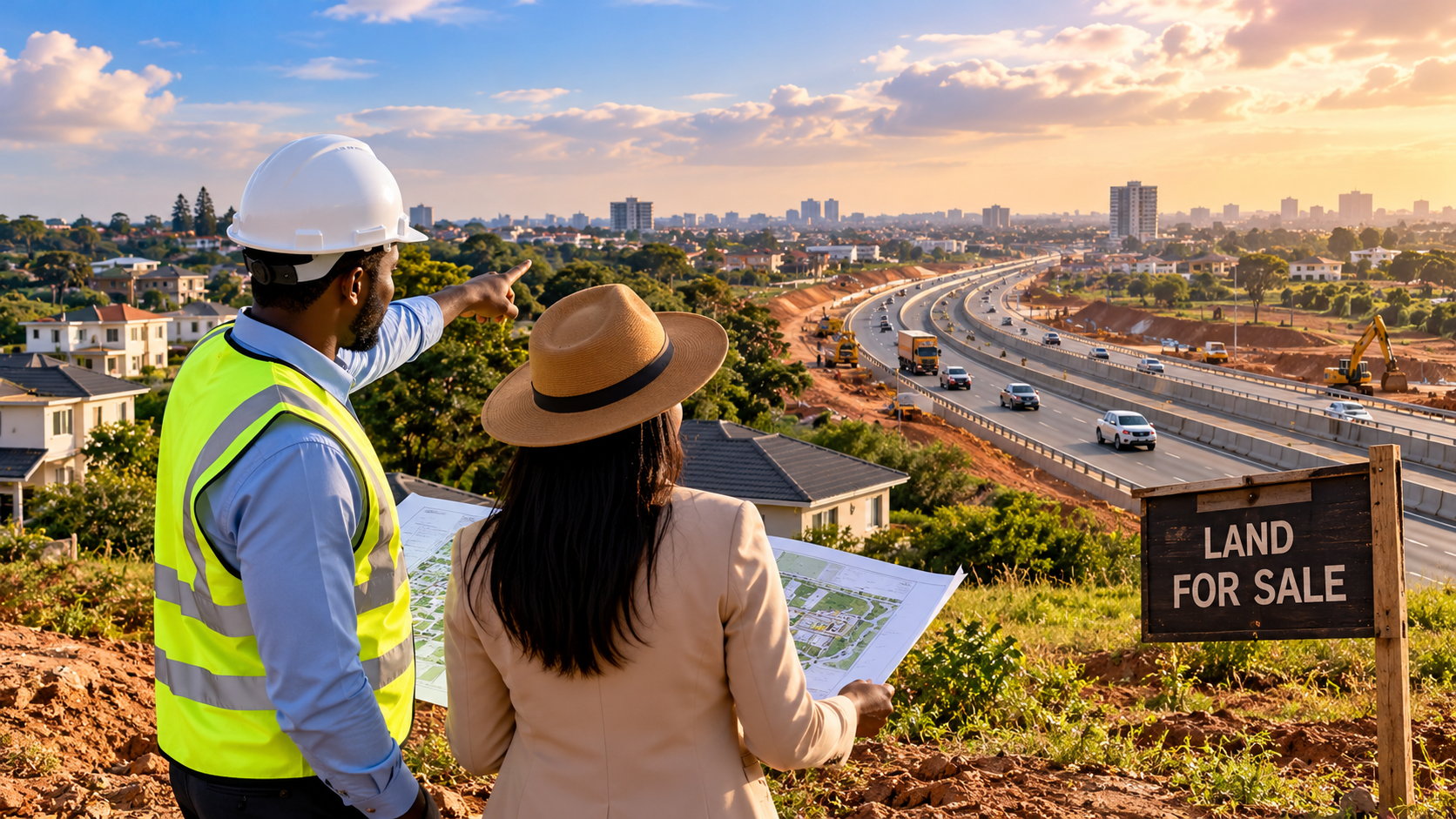
Roads decide where Kenyans can afford to live, and they shaped the Nairobi region we see today. But the road is only the first layer. The buyers who do best look beyond the tarmac to the water, sewers and drainage that make an estate livable, and who ask whether a road’s price effect has already come and gone.