
Will Climate Change Change the Way Kenyans Choose Homes? It Already Has.
Key Takeaways
Climate change and home buying in Kenya are now closely linked. After the 2026 floods, Nairobi and Machakos began demolishing structures on riparian land, including some that had approvals. Lenders and insurers are tightening up, and the Kenya Meteorological Department is forecasting a strong El Niño for October to December, so buyers are being pushed to check flood exposure before signing. Heat and water security are also shaping what people want in a home, from cooler roofs to realistic water backup. These choices are easiest for people with money and options, so resilience risks becoming a luxury unless policy keeps it affordable. The post ends with a practical checklist for buyers.
For decades, Kenyan home hunting has followed a familiar checklist: location, price, title deed, finishes, and maybe the school and the commute. Climate is now pushing its way onto that list. The rains of 2026 made it hard to ignore.
How Nairobi’s 2026 Floods and Riparian Demolitions Are Affecting Homebuyers
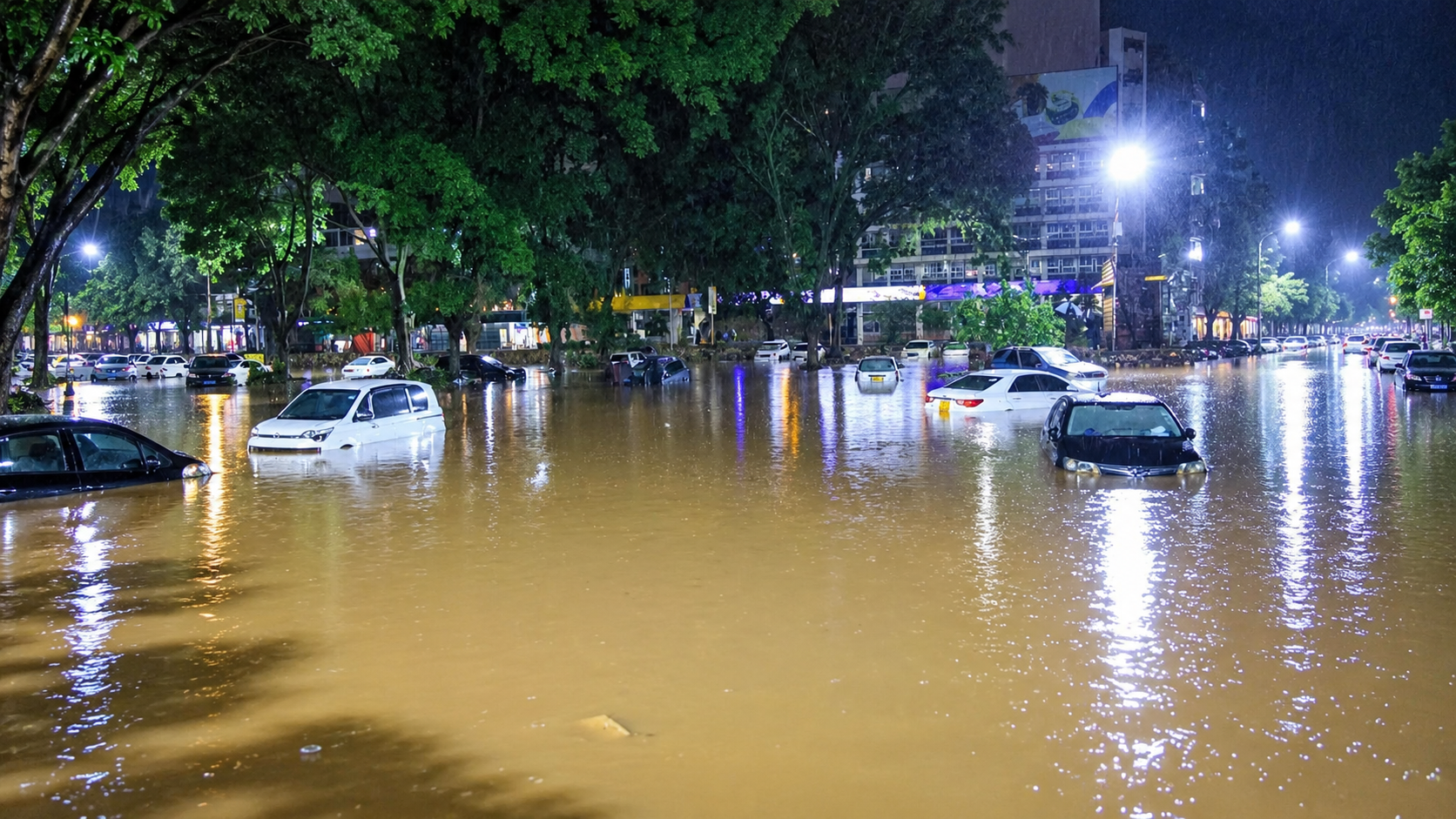
The Standard reported that heavy rain on March 6 left Nairobi flooded, with the T-Mall area among the hardest-hit hotspots. Nairobi Governor Johnson Sakaja then announced that the county would begin demolishing structures along waterways. By May, he was telling a church congregation, as reported by The Star, that many owners were losing parts of their property after getting approvals to build on riparian land and floodplains.
The problem is not limited to the capital. Kenyans.co.ke reported that Machakos County planned its own demolitions, and that Mavoko Municipal Manager Josylyn Kauta named 360 Estate, Kicheko and Kincar as areas frequently hit by floods.
The lesson for buyers is uncomfortable. A title deed and an approval may not protect you. According to the Parklands Residents Association and the Nairobi Rivers Commission, the riparian boundary along the Nairobi River is measured as a 30-metre buffer from the highest water mark. A beautiful house inside that line is a liability, however good the view.
How Banks and Insurers Treat Flood-Prone Property in Kenya
Buyers don’t have to change their minds for the market to change around them. Lenders and insurers are already adjusting.
- Banks. A property professional quoted in The Standard said that mortgage approvals are getting stricter for known flood-prone areas, with due diligence increasingly including climate risk assessments. The Central Bank of Kenya has also issued guidance on climate risk management, according to a Business Daily column on how Kenyan banks are navigating climate risk.
- Insurers. Business Daily reported that insurers including APA Apollo and Sanlam Allianz are weighing higher premiums for high-exposure areas and cover limits for properties with repeated flood losses and no mitigation. The same report noted this follows payouts of more than Sh5 billion linked to the 2024 floods.
- Prices. The Standard cited international research suggesting homes in flood-prone areas can sell at a 4 to 12 per cent discount, with values falling as much as 20 to 32 per cent after a major flood before slowly recovering. That is global evidence, not Kenyan transaction data.
Kenya also has a data problem. The law firm Cliffe Dekker Hofmeyr noted in a real estate alert that Kenya lacks a comprehensive flood risk map or accessible database to guide buyers, so most still rely on neighbours, caretakers and their own eyes.
El Niño 2026: What the October to December Rains Mean for House Hunting
If you’re house-hunting right now, the timing matters. According to the Kenya Meteorological Department, as reported by The Standard, most counties are likely to get above-average rainfall this October to December, with El Niño possibly lasting into February 2027. The government, through a Ministry of Interior statement, put 18 counties on high alert and named Nairobi, Mombasa and Kisumu as high-risk urban centres. Kenya Met Director Edward Muriuki has also cautioned that El Niño does not automatically mean heavy rainfall everywhere.
This is a rare chance to see a property under stress. A viewing on a dry Saturday tells you very little. Visit during or just after heavy rain, and ask neighbours and caretakers what happens to the compound, the access road and the nearest drain.
Heat and Water Security: What to Look For in a Kenyan Home
Flooding gets the headlines, but other pressures are quietly shaping what buyers want.
Heat. A randomized pilot study in rural western Kenya found that cool roofs and vector proofing most effectively reduced indoor heat, improved thermal comfort and lowered malaria mosquito density. Climate Home News reported that in Laikipia County, a local earth-block building technology is helping homes stay cooler as global warming accelerates. Expect the old advice on roof colour, cross-ventilation, shading and thermal mass to start appearing in property listings.
Water. Nairobi buyers already ask “does it have a borehole?” The answer is getting more complicated. Citizen Digital reported that, during the drought, landlords and homeowners in Nairobi and Kitengela saw boreholes running low, with many apartments drawing from the same water table. Quality is a concern too. Kenyans.co.ke, citing a study by researchers from several universities, reported that borehole water in Embakasi, Roysambu and Kasarani has salt levels above the limits set by KEBS and the WHO.
Rainwater harvesting is a sensible backup, yet a Kenyan academic study of a Nairobi estate found that about 80 per cent of homes lacked complete and functioning rainwater harvesting infrastructure. That data is a few years old, but it points to an opportunity for developers who build tanks and gutters in properly.
Is Climate-Resilient Housing Affordable for Ordinary Kenyans?
Climate-conscious home buying is easiest for people with options. Someone buying with a mortgage and a lawyer can walk away from a flood-prone plot. A renter in an informal settlement often can’t. People Daily, reporting on the UN Environment Programme and Global Alliance for Buildings and Construction’s latest global status report, said that climate shocks, rising construction costs and rapid urbanisation are pushing decent housing further out of reach for ordinary Kenyans. Resilience cannot become a luxury feature, or the people most exposed will have the least protection.
Checklist: How to Check a House for Flood and Climate Risk in Kenya
- Check the riparian line before you check the finishes. Ask for survey details and confirm distance from any river or stream with the relevant authority.
- Visit in the rain, or right after it, and walk the access road as well as the house.
- Ask about insurance early. Confirm that flood cover is included rather than assuming it is. The Association of Insurance Brokers of Kenya has said that typical property policies do not cover flood damage unless it is added as an endorsement.
- Look up, then out. Check the roof, gutters, drainage and the height of the plot relative to its surroundings.
- Test the water story. “Borehole plus mains” sounds reassuring, so ask about depth, test results, tank capacity and how the building copes when power is off.
- Think about heat. Orientation, shade, ventilation and roof material will affect comfort and your electricity bill for years.

The Bottom Line
Climate change won’t make Kenyans stop wanting homes with good schools nearby and a short commute. It will add a second filter, one that asks whether the property will still be safe, dry, cool and insurable in 15 years. Floods, demolitions, cautious lenders and nervous insurers are teaching the market that resilience is now part of a property’s value.